The International Symposium on Third Pole Environment (ISTPE), held during November 14-17 in Chongqing, China, witnessed 11 academic sessions covering: (1) Climate Change over the Tibetan Plateau and Its Global Linkages, (2) Water Cycle and Water Security, (3) Biodiversity and Ecosystem Service,(4) Biogeochemical Cycle, (5) Environment and Health, (6) High Resolution Paleoclimate Records and Abrupt Climate Change, (7) Prehistoric Human Activity, (8) Impact of Tibetan Plateau on Climatic and Organic Evolution, (9) Plateau Uplift and Resource Effects, (10) Disaster Risk and Response, and (11) Knowledge and Actions. The largest conference held so far internationally on the TPE study, it has effectively boosted academic communication and opened channels for further cooperation.
During the four-day event, oral presentations were made in both plenary and parallel sessions by scientists throughout the world. Latest progresses in the Third Pole Environment research effort were communicated, with participants being updated of major international programs focusing on in situ observations and satellite monitoring for this region. Participating scientists reported their systematic academic discovery published in esteemed international journals, highlighting the cooling at the glacial mass balance line under the global warming scenarios based on decades of observation data on the southern slope of Himalayas. They also gave a comprehensive consideration of possible links among various spheres, and proposed possible linkages among the three poles and studied their impacts on local atmospheric and hydrological cycles. Comparison study of grazing experiment on the Qinghai-Xizang Plateau also facilitated the policy advisory proposition from the scientific perspective.
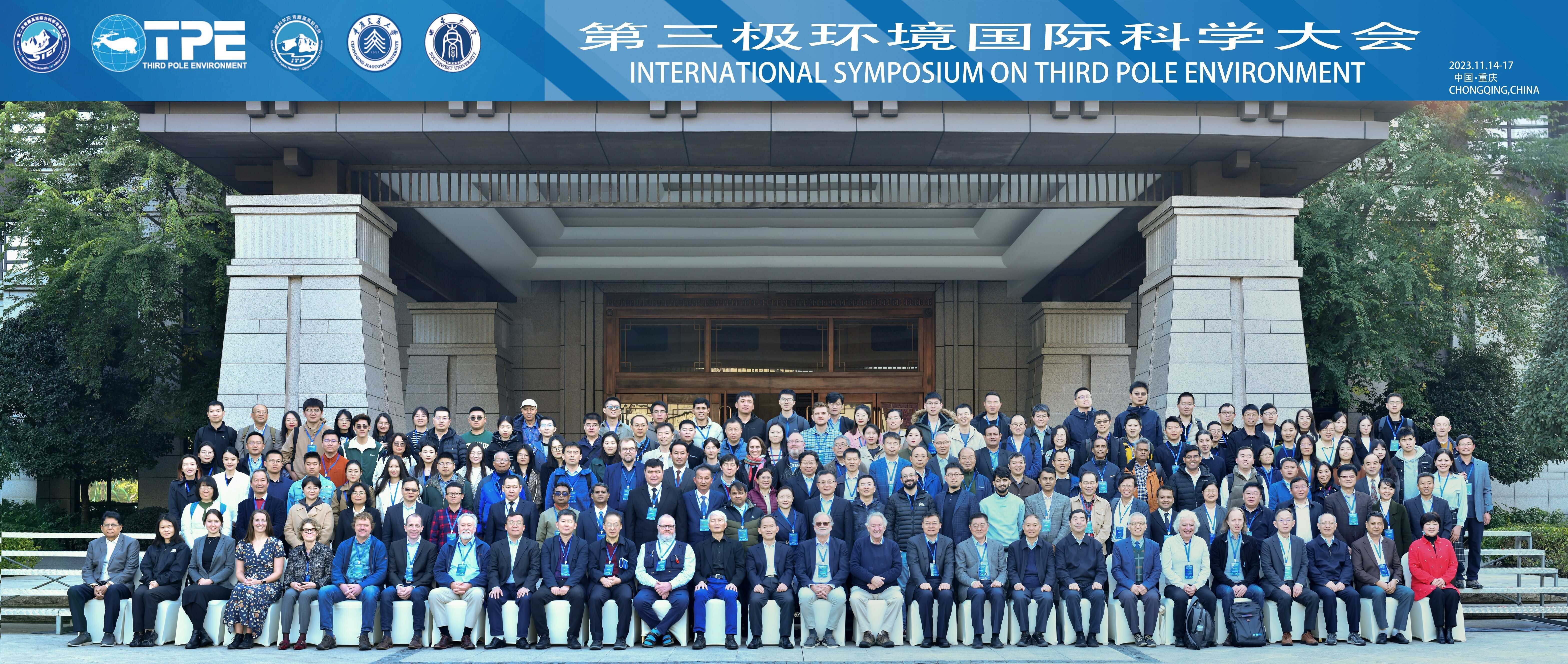
Hundreds of posters were presented during the symposium, allowing participants to acquaint themselves with latest academic achievements from different perspectives, even some burgeoning research results, and allowing for further facial communication and incubating potential collaborations. The symposium ends on November 17th, 2023, with summary for each session and further action plans.
All information about the conference is available from ISTPE website.